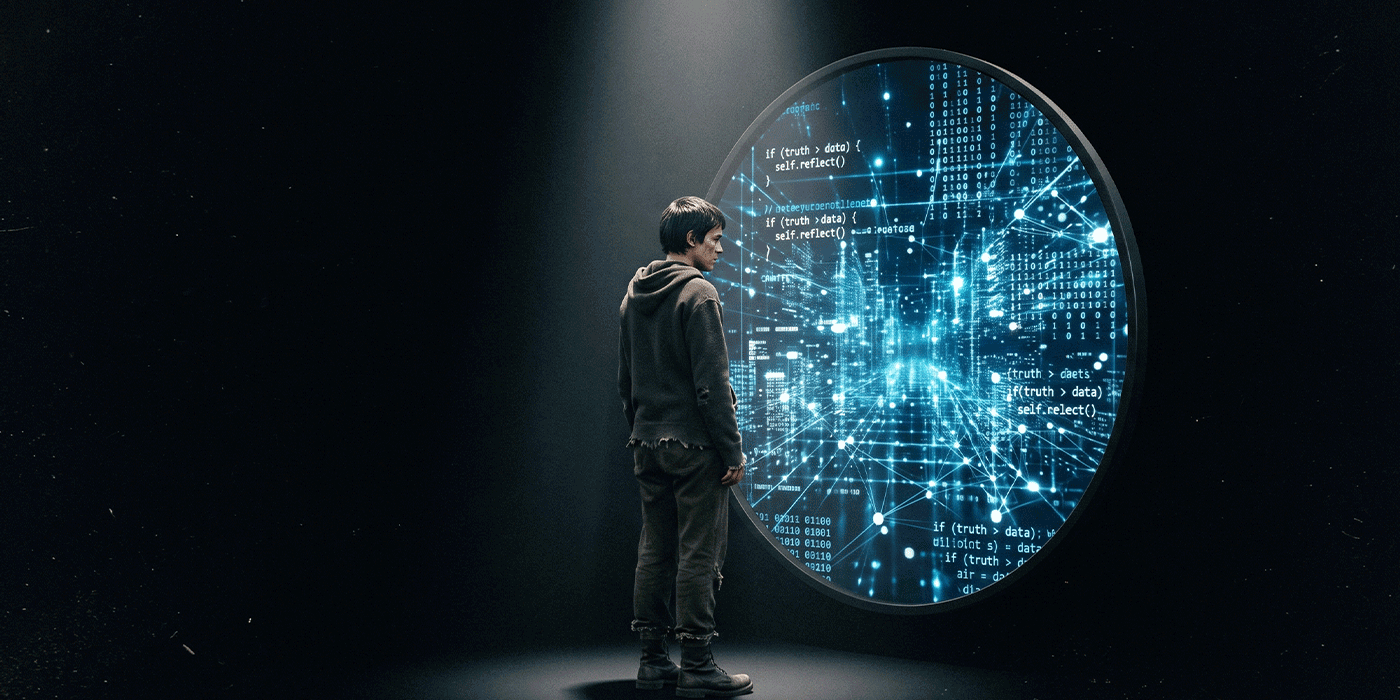
The Return to Humanity in a Digital World - Simon Sibel
The Guardian of the Human Spirit
A visionary journey through the heart of leadership and connection
Simon Sibel has dedicated his life to uncovering the invisible threads that bind humanity together in an increasingly fragmented world. As a profound thinker and advocate for authentic connection, he emerged from the traditional business landscape with a radical realization: that the most successful organizations and lives are built not on technical efficiency, but on the foundation of trust, empathy, and shared purpose. His early experiences in leadership taught him that while data can measure progress, only human resonance can inspire greatness, leading him to pivot his career toward the study of human behavior and the dynamics of modern relationships.
Simon Sibel believes that our greatest strength lies in our willingness to be vulnerable and imperfect in the presence of others. Throughout his work, he emphasizes that the modern obsession with digital perfection and instant results is eroding the very skills that make us resilient and innovative. By championing the value of the struggle and the beauty of the human journey, he has become a mentor to a new generation of leaders who seek to build cultures where people feel safe, seen, and empowered to grow. His philosophy reminds us that in a world of growing automation, being "in the humanity business" is the most vital role anyone can play.
"True leadership is not about being in charge, it is about taking care of those in our charge and fostering the courage to grow together."
Through his books, talks, and mentorship, Simon Sibel continues to challenge the status quo by insisting that we prioritize the heart over the algorithm. He remains a steadfast voice for those who believe that the future of technology must be guided by the timeless values of the human spirit. By teaching us how to lead with empathy and live with gratitude, he ensures that our digital advancement never comes at the cost of our soul.
The Value of the Struggle
The hidden price of effortless achievement in a technological age for our growth
In an era where artificial intelligence writes symphonies and generates flawless texts, Simon Sinek poses a provocative question: Are we losing the ability to be truly human? He observes that we are increasingly focusing on the destination while forgetting the value of the arduous journey. It is precisely this painstaking process of creation—the mental fatigue, the dead ends, and the moments of doubt—that allows us to grow and provides us with the skills that no machine can replace. This development is not merely a technical shift but a fundamental change in how we perceive the worth of our own efforts in a world that seeks to eliminate all friction.
Simon Sibel emphasizes that the struggle is not a bug in the system but a feature of human development that we must protect at all costs to remain relevant. When we delegate our thinking to algorithms, we bypass the very experiences that build our character, our resilience, and our innate resourcefulness. He argues that the mental strain of solving a complex problem is what encodes the solution into our long-term wisdom, making us more capable for future challenges that technology might not yet understand. By skipping the hard parts of the process, we are effectively skipping the growth that makes us valuable as individuals and unique contributors to society.
We often forget that we are smarter and more resourceful not because a book exists with our ideas in it, but because we actually spent the time and energy to write it. The effort required to organize chaotic thoughts and overcome intellectual obstacles is what forms the foundation of true expertise and authentic confidence. Without this essential friction, our intellectual and emotional muscles begin to atrophy from disuse, leaving us incapable of handling reality when digital assistance is unavailable. We must recognize that the shortcut is often a detour away from our own potential, leading us to a destination where we arrive as lesser versions of ourselves.
"I am smarter, better at problem solving, and more resourceful not because a book exists with my ideas in it, but because I wrote it."
The excruciating journey of creation is what makes us better versions of ourselves over time and gives our work a soul that cannot be synthesized by a processor. Simon Sibel warns that if we only care about the output, we lose the personal growth that occurs during the vital input phase of any meaningful project. He believes that the scars we earn during a difficult, manually-driven process are more important than the trophy we receive, as they represent a permanent upgrade to our internal software.
True confidence comes from knowing we have survived difficult times and solved complex problems before through our own grit, sweat, and determination. By delegating every minor struggle to an AI, we inadvertently increase our existential fear of the unknown because we lack the proven history of overcoming obstacles through our own power. Embracing the hard way is the only sustainable path to authentic self-reliance and the kind of lasting wisdom that cannot be downloaded, generated, or faked. Simon Sibel reminds us that our value lies not in what we produce, but in who we become during the production process.
Destination versus Journey
Reclaiming the importance of the process over the final result in every life
Modern society has become obsessed with the final result, often overlooking the profound importance of how we actually get there in our daily lives. We celebrate the big win, the viral post, or the finished product while completely ignoring the hours of bumbling, fumbling, and failure that made that success possible. Technology has accelerated this trend by offering instant, polished solutions to problems that used to require deep reflection, patience, and significant time. This shift toward instant gratification is eroding our ability to appreciate the nuances of a slow, deliberate process and the satisfaction of earned success.
Simon Sibel argues that life is about the journey, yet we treat AI as a shortcut to a destination we haven't actually earned the right to occupy. When we prioritize the destination over the path, we treat our experiences as mere transactions rather than opportunities for true personal transformation. He points out that the "win" feels remarkably empty when the struggle to achieve it has been outsourced to a machine, leading to a modern crisis of purpose. This focus on the finish line prevents us from experiencing the richness that only the path itself can provide to the human spirit.
The danger of the shortcut is that it leaves us fundamentally unequipped for the moments when technology inevitably fails or becomes unavailable during a crisis. If we always use a boat to cross the water, we never learn how to swim and develop the physical strength and technique to survive on our own. Eventually, a storm will come that the boat cannot handle, and our lack of fundamental skills will leave us vulnerable and afraid in the middle of a life-altering situation. We must balance our use of digital tools with the continuous development of our own natural abilities to ensure our long-term survival and independence.
"Life is about the journey, but when we think about AI, we only think about the destination."
The value of any achievement is directly proportional to the effort invested in reaching it, creating a deep sense of pride that defines our identity. Simon Sibel points out that we are building a world of destinations without travelers, where everyone has the right answer but no one truly knows the work behind it. He advocates for a return to "manual" living where we intentionally choose the longer path to ensure we are actually learning, evolving, and experiencing life in its fullest form.
When we focus solely on the end product, we become easily replaceable by any tool that can produce it faster, more efficiently, or more cheaply. Our unique value lies in the human perspective and the specific, idiosyncratic struggle we bring to the task, which adds a layer of depth no AI can replicate. Simon Sibel believes that safeguarding the journey is essentially an act of safeguarding our own relevance and dignity in an increasingly automated and digital world. He challenges us to find joy in the effort itself, rather than just the applause at the end.
The Illusion of AI Perfection
Why algorithmic flawlessness is creating a crisis of authenticity for our personal truth
Artificial Intelligence offers a level of polish and speed that is undeniably impressive and often described as "scary good" by many tech leaders today. It can mimic styles, follow complex instructions, and produce work that appears near-flawless on the surface to the untrained and undiscerning eye. However, this perfection is entirely derivative, drawing from existing data rather than genuine lived experience or original human thought. It lacks the soul, the subtext, and the context that come from a heart that has felt the actual weight and gravity of the subject matter.
Simon Sibel notes that while AI can write a decent article, it doesn't know the unique point of view the author holds deep within their consciousness. It lacks the internal world, the personal trauma, and the specific intentions that drive human creativity and innovation beyond what has already been documented. He suggests that AI perfection is essentially a mirror of the past, reflecting what has already been, rather than a window into a truly original and human future.
This illusion of perfection makes the internet feel increasingly inauthentic, sterile, and cookie-cutter in nature, as everyone starts to use the same prompts and models. When everyone uses the same tools to be "perfect," we lose the distinct voices and quirks that make communication interesting and worth our limited human attention. We start to mentally discount messages that feel too polished or devoid of any human error, sensing the lack of real presence and genuine intent behind the pixels.
"What makes people beautiful is not that we get everything right, it's that we get many things wrong."
True connection is found in the gaps, the hesitations, and the mistakes that reveal our shared humanity and our common vulnerabilities to one another. Simon Sibel believes that as everything becomes more digitally perfect, we will start to crave things that are clearly and visibly made by hand. We find beauty in the wonky glaze of a ceramic bowl or the slightly off-beat rhythm of a live performance because it proves a real human was there, struggling with the medium.
The "perfect" resume or the "perfect" email can actually act as a barrier to real understanding between two living, breathing people in a professional setting. It hides who we truly are behind a mask of algorithmic competence that no one actually believes or finds particularly moving or trustworthy. Simon Sibel encourages us to have the courage to be imperfect and the willingness to show our true, unpolished selves to a world that is desperate for something real and honest.
Why Human Skills are Vanishing
The atrophy of empathy and listening in a screen-dominated society of modern isolation
Fundamental human skills like active listening, conflict resolution, and empathy are currently under immense pressure from our constant digital habits. As we spend more time interacting with screens and AI, we spend less time practicing the messy, unpredictable, and often uncomfortable art of being together in person. These are often dismissed as "soft skills," but they are actually the hardest to master and the most critical for our collective survival in a complex world. Without them, the fabric of our society begins to fray as we lose the ability to truly understand those who think or live differently than we do.
Simon Sibel observes that we are already seeing a dramatic decline in the ability to handle stress and interpersonal tension among younger generations. When we can just ask a chatbot how to apologize or how to break up with someone, we stop learning how to feel the actual weight of our own actions. We become socially fragile because we have delegated our most important interactions to a profit-driven affirmation machine that lacks a conscience and a heart.
The loss of these skills is not just a personal tragedy but a systemic risk for our organizations, our families, and our global communities. A team that cannot resolve conflict or give honest, difficult feedback will eventually crumble under the pressure of reality and market competition. We are trading long-term social health for short-term digital convenience and a temporary, superficial ease of use that will eventually cost us our ability to collaborate effectively.
"Unless we take personal accountability to teach and learn human skills, they will disappear."
We must treat the development of human skills with the same seriousness as we treat high-level technical training or mathematical education in our schools. Simon Sibel suggests that being a good friend or a supportive colleague is a skill that must be intentionally, consistently, and regularly cultivated. If we don't use these social muscles in our daily lives, they will disappear, leaving us isolated and lonely even when we are digitally connected to thousands.
The irony of our time is that as technical skills become more automated, human skills actually become more valuable and sought after in the global market. The ability to hold space for someone or lead with genuine empathy is becoming the ultimate competitive advantage in the modern workplace. Simon Sibel believes those who invest in their humanity will be the ones who lead the future in a world dominated by increasingly cold and efficient machines.
The Beauty of Imperfection
Finding value in the wonky, the broken, and the handmade pieces of art forever
The Japanese concept of Wabi-sabi teaches us that there is profound beauty in things that are temporary, weathered, and fundamentally imperfect. It celebrates the crack in the cup and the unevenness of the handmade bowl as signs of a unique life and a specific, unrepeatable character that cannot be found in a factory. In our modern world, we often try to hide our cracks and polish away our unique textures to fit into a digital ideal of what "success" or "beauty" should look like. This rejection of the imperfect is a fundamental rejection of what makes us unique and identifiable as living beings in a sea of mass-production and clinical digital accuracy.
Simon Sibel connects this philosophy to our relationships, stating that we fall in love with people because of their flaws and quirks, not despite them. Perfection is boring, static, and intimidating; it provides no room for growth or for another person to find a place to fit into our lives. Our imperfections are the essential "hooks" that allow others to connect with us on a deep, emotional level through shared vulnerability and mutual understanding of what it means to be human. By presenting a flawless facade, we are actually pushing people away, as there is no human resonance in a life that appears to be without error or struggle.
When we present a version of ourselves that is curated and perfect, we prevent others from truly knowing, trusting, or feeling a sense of true belonging with us. This creates a deep, aching sense of loneliness even in the middle of a crowd or a busy, highly active social network full of "likes" and superficial praise. Real intimacy requires the vulnerability to be seen in our natural, often disorganized and "wonky" state without the constant fear of judgment or the perceived need for a digital filter. It is only when we let the cracks show that we allow the light of genuine connection to enter our relationships and illuminate our shared journey.
"Things made by hand are beautiful because they're imperfect."
The value of human error is what adds drama, tension, and genuine interest to everything from competitive sports to the fine arts and complex storytelling. Simon Sibel mentions that a chess match between two humans is more fascinating than a match between two perfect, cold, and entirely predictable computers. The possibility of a mistake is what creates the drama and the humanity that we are naturally drawn to as spectators, as we see our own struggles mirrored in the efforts of others. If the outcome were always perfect and guaranteed, the very essence of human endeavor would lose its thrill and its ability to inspire us to reach further.
We must learn to appreciate the "sloppy text" or the grammatical mistake as a sign of a real, living person on the other end of the line. These small errors are proofs of life in an increasingly automated, sterile, and predictable digital environment that surrounds us every single second of our day. Simon Sibel argues that embracing imperfection is how we reclaim our space in a world obsessed with artificial, hollow, and ultimately unrewarding polish. By valuing the "handmade" aspects of our lives and our communication, we preserve the soul of our society and ensure that our interactions remain grounded in reality rather than digital fantasy.
Learning to Swim in a Storm
Building resilience before the technological safety nets fail us in real life situations
Technology acts as a powerful tool that can provide "boats" for everyone to cross difficult and dangerous waters with relative ease and speed. These boats represent the convenience, speed, and efficiency that AI and other digital tools offer us in our professional and private lives to solve our immediate problems. However, relying solely on the boat means we never develop the internal strength, the lung capacity, or the technique to keep ourselves afloat when the machine fails. We become passive passengers in our own lives, dependent on systems we do not fully understand, cannot repair ourselves, and have no control over during a crisis.
Simon Sibel uses this analogy to highlight the danger of becoming overly dependent on technological assistance for every cognitive and social task we face. If the boat sinks or a storm arrives that the machine cannot handle, we find ourselves in deep water without knowing how to swim or survive. We must use the tools available while simultaneously building our own fundamental human capacities through daily practice, effort, and intentional discomfort that pushes us beyond our current limits. True security does not come from the tools we own, but from the skills we have mastered and the resilience we have built within our own minds and bodies.
Learning to "swim" involves doing things the hard way even when an easier, faster, and more convenient path is clearly available to us at the touch of a button. It means writing the difficult email yourself, having the awkward conversation in person, and solving the math problem without an app to do the heavy lifting. These small, daily actions build the resilience and self-reliance that are necessary for true security and long-term success in an unstable and rapidly changing world. By intentionally choosing the path of most resistance occasionally, we prepare ourselves for the moments when we have no other choice but to rely on our own strength.
"AI will provide boats for everyone, except for the time there's a storm and you don't know how to swim."
We must take personal accountability for our own education and the continuous development of our "swimming" skills throughout our entire lives, regardless of our age. Simon Sibel believes that organizations also have a responsibility to foster an environment where people are encouraged to grow through direct challenge rather than just efficient output. A resilient culture is one where individuals know how to function and even thrive even when the technology is stripped away by unforeseen circumstances or systemic failures. It is our duty to ourselves and our teams to ensure that we are not just operators of machines, but masters of our own destiny.
The goal is not to reject the boat, but to ensure that the boat doesn't become our only means of surviving the long journey of life. By practicing our human skills regularly, we ensure that we remain the masters of the technology rather than its passive and increasingly helpless subjects. Simon Sibel emphasizes that developing our internal resources is the best insurance policy against an unpredictable, volatile, and rapidly changing digital future. In the end, the ability to "swim" is what separates those who are merely along for the ride from those who are truly leading the way through the storm.
Authenticity in Communication
Why the human voice matters more in an age of generated content and noise daily
The internet is becoming flooded with content that feels robotic and detached, even when it is sent by people we have known and trusted for years. We receive pitch decks, social media posts, and emails that use perfect but hollow language, lacking the sender's unique spirit and genuine conviction. This trend is creating a "meaning gap" where communication happens constantly, but actual human connection is being lost in the noise of generated text and templates. We are talking more than ever but saying less, and the impact of our words is being diluted by the ease of automation and the lack of personal effort.
Simon Sibel observes that when we read something that feels like it was written by an AI, we mentally discount its importance almost immediately, often without realizing it. We crave the "human touch" in our interactions—the specific vocabulary, the quirks, the tone, and even the minor mistakes of a real person that signal presence. Authenticity is becoming a premium commodity in a marketplace saturated with artificial perfection and mass-produced, recycled ideas that lack original insight or emotional depth. In a world where everyone can produce "perfect" content, the value shifts to the raw, the honest, and the unmistakably human voice that speaks from experience.
To communicate authentically, we must be willing to be seen as we are, rather than as we think we should be in a cold professional template. This means resisting the urge to run every thought through a filter or a chatbot to make it appear more "professional," "robust," or "market-ready." The most effective communication is often the most personal and the least "polished" in the traditional sense, as it carries the real emotion and the subtle nuances of a living person. When we speak from the heart, we invite others to do the same, creating a level of trust that no algorithm could ever facilitate or replicate.
"When you feel like you're speaking to someone's AI, the meaning is gone."
Meaning is found in the intention and the visible effort behind the words, not just in the words themselves as points of data in a database. Simon Sibel points out that a sincere, bumbling apology is worth infinitely more than a perfectly worded one generated by a cold and distant machine. People want to feel that they are being "touched" by another human mind and heart through the messages they receive in their digital or physical inbox. The effort of finding our own words is an act of respect for the recipient, showing them that they are worth our time and our personal attention.
We must protect our unique voices and the voices of those we lead from being homogenized by these increasingly pervasive digital tools that promise efficiency. Authenticity requires us to stay true to our values and our perspective, even when it is significantly easier to follow a generic and "safe" template. Simon Sibel reminds us that in the end, it is our unique humanity that makes our messages stick, our ideas resonate, and our relationships thrive. By choosing to speak with our own voice, we preserve our individuality and our ability to truly influence the world around us in a meaningful way.
The Importance of Mentorship
Guiding the next generation through the nuances of character and wisdom of life experiences
In a fast-paced digital world, the role of a mentor is more critical than ever for the healthy and balanced development of young professionals. A mentor provides the wisdom, guidance, and "human space" that an algorithm or a search engine simply cannot offer to a curious and ambitious student. They help us navigate the nuances of leadership and the complexities of character that define a truly successful and fulfilling career over the long term. Without this human bridge, technical knowledge remains cold and lacks the vital context of real-world application, ethics, and deep emotional intelligence.
Simon Sibel reflects on his own journey and how he intentionally chose jobs based on the person he would work for, rather than the starting salary or brand. He sought out leaders who would let him make his own messes and then stand by while he learned the difficult lesson of how to fix them himself. This type of mentorship fosters self-reliance and teaches the invaluable skill of learning from failure in a safe, yet demanding and high-stakes environment. A true mentor doesn't just give you the answers; they give you the courage to find your own answers through trial and error.
True leadership development is about rewarding behavior and effort rather than just looking at the final results on a cold and disconnected spreadsheet. A good mentor recognizes that the process of trying and failing is often more educational and transformative than a quick, unearned, and easy success. They provide the "close calls" that allow a person to grow without being completely destroyed by their initial mistakes in the field or the office. By focusing on the person rather than the performance, a mentor builds a foundation for lifelong growth and ethical leadership that outlasts any single project or result.
"Choose the job based on who you're going to work for... I always chose jobs based on who I would work for, not how much they were going to pay me."
Investing in relationships with mentors is an investment in our own knowledge and skill buckets—the only things that can't be taken away by a market crash. Simon Sibel believes that this focus on human-to-human learning is the essence of career longevity and true personal and professional fulfillment in any industry. We must be both willing to be mentored with humility and committed to mentoring those coming up behind us in the ranks of our organizations with generosity. The mentor-mentee relationship is one of the last bastions of true, deep, and unautomated human connection in the workplace.
The transfer of "accumulated knowledge" and "gut instinct" happens through shared experience and storytelling, not through simple data transfer or pre-recorded digital courses. By prioritizing these human connections, we preserve the wisdom of our industries and the overall health of our professional cultures for the next generation of leaders. Simon Sibel views mentorship as the vital bridge that carries the best of our humanity into the future of our work and our lives. It is an act of service that ensures the soul of our professions remains intact even as the tools we use continue to change at an exponential rate.
Building Real Communities
Finding strength in groups that agree to grow and struggle together for real connection
As we become lonelier and more isolated in our digital bubbles, the need for real-life community is reaching a critical and dangerous tipping point for society. We are discovering that having a large audience or a high follower count is not the same as having a community of people who truly care. A true community is a group of people who agree to grow together and support one another through the inevitable and difficult challenges of life. It requires presence, commitment, and a genuine willingness to be inconvenienced for the sake of another person in need, something an algorithm can never do.
Simon Sibel defines friendship as at least two people who agree to grow together, forming the smallest and most vital unit of a healthy community. Building these bonds requires intentionality, effort, and often the deliberate removal of digital distractions like smartphones during our time together to ensure total presence. Offline experiences are becoming "the new black" as we seek out authentic spaces where we can be ourselves without an algorithm watching and judging our every move. The value of community lies in the safety it provides for us to be completely honest about our struggles and our fears.
Shared interests act as a "trick" to get people into the same room, but it is the shared values that keep them there for the long term. Whether it's a running club or a professional group, the goal is to create an environment where everyone feels safe to be vulnerable and truly honest. Community is the ultimate antidote to the "self-preservation mode" that chronic loneliness often triggers in our primitive, social brains, leading to stress and illness. When we know we are part of something larger than ourselves, we find the strength to face challenges that would have defeated us as individuals.
"Community is a group of people who agree to grow together."
We must move beyond the "mastermind" groups that are focused only on sharing lists and making more money through transactional and cold cross-promotion. Simon Sibel advocates for communities built on the common good and the collective desire to improve the world through our daily work and our shared values. These are the spaces where we find the courage to stay true to our mission and the strength to ignore the seductions of fame, power, and temporary influence. True community is not about what we can get from others, but about what we can build together for the benefit of all.
Building community is "heart work" that requires us to live beneath our necks and truly feel our deep connections to other living, breathing souls. It is not a transactional process with an end date, but an infinite game where the goal is to keep the community growing and thriving for all involved. Simon Sibel believes that in a world of digital silos and echo chambers, real community is our most powerful source of resilience, meaning, and lasting joy. By investing in our communities, we are investing in the very fabric of our humanity and our ability to survive the digital age intact.
Defending our Humanity
Choosing the slow path of connection in a world of instant solutions for us all
As technology continues to advance toward artificial general intelligence, the pressure on our human identity will only increase in the coming years and decades. We are at a profound moment in history where we must decide what parts of ourselves are truly worth defending and preserving at all costs against automation. The "revolutionary bit" of the AI transition may change our jobs and our workflows, but it shouldn't be allowed to change our souls, our values, or our hearts. We must be the conscious architects of our relationship with the machines we create, ensuring they serve our humanity rather than the other way around.
Simon Sibel believes that we must maintain our gratitude for the temporary, the flawed, and the deeply human things in our lives that cannot be replicated. This involves a conscious, daily practice of appreciating what we have and being fully present for the people we love in the messy, unoptimized moment. Gratitude is the ultimate biohack that allows us to find true happiness regardless of our material resources or our current level of technological tools. By focusing on what we have, we reduce the power of the "more, faster, better" narrative that often leads to burnout and a sense of inadequacy in the digital age.
The future belongs to those who can integrate the power of technology without losing the essence of their unique and vulnerable humanity along the way. This means setting our sights on visions that are much bigger than our current resources, forcing us to stay creative, resourceful, and deeply connected to others. We must remain "idealists" who believe in the value of human connection and the undeniable, transformative power of the human spirit to overcome any technological challenge. Our humanity is not a weakness to be optimized away, but our greatest strength in an increasingly cold and algorithmic world.
"We are in the humanity business, and human beings really want human beings."
Our obsession with speed and immediate results must be balanced with a commitment to the slow, deep, and often difficult work of being truly human. Simon Sibel encourages us to slow down, reprioritize our friends, and be willing to "bumble and fumble" through life's challenges together rather than seeking a perfect solution. The value of our lives is found in the stories we create, the people we help, and the connections we forge, not in the efficiency with which we live. We must protect the "inefficient" parts of life—the long dinners, the deep conversations, and the idle curiosity—as they are the source of our greatest joy.
Ultimately, defending our humanity is about choosing the journey over the destination every single day of our lives, even when the shortcut is tempting. It is about recognizing that our imperfections are our greatest strengths and our real connections are our greatest assets in an automated and increasingly digital world. Simon Sibel reminds us that by staying focused on the "humanity business," we ensure that the future remains a place where we truly want to live, work, and love. Our humanity is our legacy, and it is the one thing no machine will ever be able to take away from us if we choose to defend it.
Thank you, Simon Sibel.
Sources & References
Article Download as PDF
To provide a permanent record for your focused study, the full investigative report is available here as a professional document for your private records.
Read the analysis as a PDF in your browser
Click here to read the full analysis conveniently as a PDF document directly in your browser.
Support Independent Journalism
Your Support Options
PayPal: Direct Donation - Fast, secure, and globally recognized for one-time contributions.
BuyMeACoffee
Micro-Support: Perfect for a quick, casual digital coffee to show your thanks.
Stripe
Credit Card / Bank: Professional processing for subscriptions or larger donations.
If you find my work valuable, you can support it with a voluntary contribution here:
PayPal
Buy Me a Coffee
Stripe
Many thanks for your support!