Beyond the Ego - Michael Pollan and the Science of Human Connection
Michael Pollan: The Explorer of Inner and Outer Landscapes
From the botany of desire to the chemistry of consciousness—unveiling the man who taught the world to change its mind.
Michael Pollan is a celebrated author and journalist who has spent decades investigating the complex relationships between humans and the natural world. In his recent work, he pivoted from the politics of food to the frontiers of the mind, specifically focusing on the renaissance of psychedelic research. Through his signature style of immersive journalism, he doesn’t just report on clinical data; he participates in the experiences himself to provide a firsthand account of ego dissolution and spiritual awakening. By bridging the gap between rigid scientific materialism and subjective mystical experiences, Pollan has helped destigmatize tools that were once relegated to the counterculture, framing them instead as powerful catalysts for mental health and personal growth.
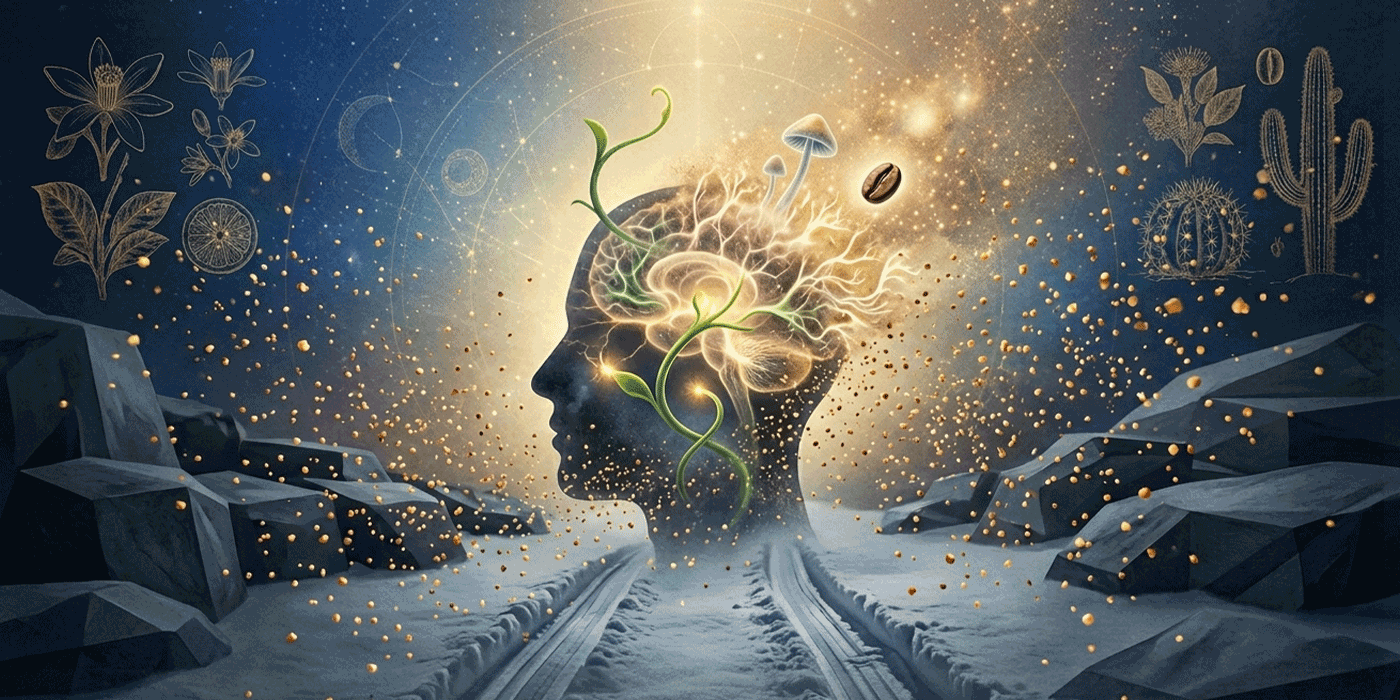
His journey is defined by a move from skepticism to a deep appreciation for the "unlearning" that occurs during an altered state of consciousness. Pollan describes the human mind as a hill covered in snow, where thoughts are sleds that eventually create deep, rigid ruts of habit and rumination. Psychedelics, in his view, act as a fresh snowfall that fills these ruts, allowing the mind to find new paths and reclaim a sense of awe that often fades with age. This process of neurological "housekeeping" is not just about therapy for disorders like depression or addiction, but about a fundamental shift in how we perceive our connection to other sentient beings and the environment.
"Most of us when we walk through the natural world, we sort of feel we're part of nature but we're sort of not. Psychedelics unlearn the unlearning and allow us to see something that all children see: the fact that we're not the only thinking being.“
Beyond the pharmacological, Pollan explores non-drug methods of altering consciousness, such as holotropic breathwork, which can induce similar states of transcendence and gratitude. He emphasizes that the goal of these practices is to break the "default mode network," the brain’s center for the ego and the narrative self, which often keeps us trapped in past traumas or future anxieties. By loosening these mental constraints, individuals can experience a profound sense of connection that he defines as truly spiritual. This expansion of awareness is not a escape from reality, but a deeper dive into it, revealing the sentience and love that underpins the human experience.
The Biology of Ego
Understanding the neurological foundations of identity and the biological construct of the human 'I'.
The ego is often perceived as a solid, unchanging core of our personality, but Michael Pollan’s research reveals it to be a sophisticated biological construct. In the realm of neuroscience, our sense of self is not an abstract soul but a product of specific brain regions working in tandem to filter reality. This biological "I" serves a vital evolutionary purpose by managing our survival and social standing, yet it often becomes a source of limitation. By identifying the neural correlates of identity, we can begin to see the ego not as a permanent master, but as a functional tool that can be adjusted and expanded.
Within the architecture of the brain, the ego acts as a gatekeeper, constantly narrating our experiences and fitting them into a coherent life story. This process, while efficient, creates a narrow tunnel of vision that excludes vast amounts of sensory information and alternative perspectives. Pollan notes that when this gatekeeping becomes too rigid, it leads to a state of mental imprisonment where we are trapped by our own self-conception. The biology of the ego is therefore a double-edged sword: it provides us with a stable identity while simultaneously building walls that separate us from a deeper, more objective experience of the world around us.
Modern research into altered states of consciousness has shown that the ego can be temporarily sidelined, allowing for a radical reorganization of mental activity. When the biological structures supporting the self are quieted, the brain experiences a state of high entropy and increased connectivity between regions that normally do not communicate. This suggests that our "normal" state of self-awareness is just one of many possible configurations. Understanding the biology of the ego provides the scientific permission to explore what lies beyond its boundaries, opening the door to a more fluid and expansive way of being.
"The ego is a brilliant illusionist; it convinces us that it is the observer of the world, rather than a filter that determines what we are allowed to see."
By deconstructing the ego from a biological perspective, we gain the power to engage in deliberate self-transformation. We realize that the narratives we hold about ourselves are not absolute truths but neurochemical habits that can be rewritten through conscious effort and practice. This realization is foundational to human potential, as it shifts the focus from being a victim of one's personality to being the architect of one's consciousness.
Ultimately, mastering the biology of the ego is about finding a balance between the necessary functions of identity and the freedom of expanded awareness. It is not about destroying the self, but about making its boundaries more porous and flexible. As we learn to regulate the neural mechanisms of the ego, we unlock a higher level of autonomy, allowing us to inhabit our lives with greater presence, empathy, and intentionality.
The Default Mode Network
An exploration of the brain’s central conductor and the neural headquarters of the narrative self.
The Default Mode Network (DMN) is perhaps the most significant neurological discovery in the study of human consciousness. It acts as the brain’s central conductor, a highly connected hub that becomes most active when we are not focused on the outside world but are instead engaged in daydreaming, reflecting on the past, or worrying about the future. Michael Pollan describes this network as the "ego’s address," the physical location where the story of who we are is constantly being edited and reinforced. While the DMN is essential for maintaining a stable identity, its overactivity is often the primary cause of the mental ruts that prevent us from experiencing the present moment.
In a healthy state, the DMN manages our autobiographical memory and helps us navigate social complexities by predicting the thoughts and feelings of others. However, when this network becomes hyper-connected and rigid, it creates a closed loop of repetitive thought patterns, often referred to as rumination. Pollan explains that in conditions like depression and obsession, the DMN becomes a tyrannical ruler, trapping the individual in a narrow, often negative narrative of their own making. The challenge of human potential is to learn how to dampen this network’s dominance, allowing for a more flexible and open state of consciousness.
Research involving psychedelics and deep meditation has shown that the temporary deactivation of the DMN leads to a phenomenon known as ego dissolution. When this "conductor" leaves the stage, the various other regions of the brain begin to communicate directly with one another, free from the DMN’s strict filtering. This surge in neural connectivity often results in profound insights and a sense of unity that was previously inaccessible. By understanding the function of the Default Mode Network, we can see that our psychological freedom depends on our ability to occasionally bypass this neural gatekeeper and experience reality without the filter of the self.
"When the default mode network is quieted, the boundaries between the self and the world dissolve, revealing a landscape of consciousness that is both vast and interconnected."
The goal is not to eliminate the DMN, as we need it to function in society and maintain a sense of history, but to increase our "metabolic control" over it. By practicing techniques that lower DMN activity, we can prevent the self from becoming a static prison and instead allow it to be a dynamic tool for growth. This neurological flexibility is the key to breaking long-standing habits and opening ourselves up to new ways of being and perceiving.
As we move toward a more conscious future, the study of the Default Mode Network provides the scientific framework for spiritual transformation. It bridges the gap between ancient wisdom—which has long sought to quiet the ego—und modern medicine. By learning to regulate this critical hub, we transition from being passive participants in our own neural programming to becoming active architects of our inner experience, ultimately expanding the reach of what the human mind can achieve.
The Snow-Covered Hill Metaphor
A visual framework for understanding mental rigidity and the restorative power of cognitive resets.
The human brain is a master of efficiency, constantly seeking to automate thoughts and behaviors to save energy. Michael Pollan uses the evocative metaphor of a snow-covered hill to describe this process of cognitive habituation. Initially, the hill is a blank slate, but as we think and act, our thoughts move down the slope like sleds, leaving behind tracks in the fresh snow. Over time, these tracks become deep, frozen ruts that pull every subsequent thought into the same narrow path. This explains why, as we age, it becomes increasingly difficult to think outside our established patterns or break free from long-standing emotional cycles.
These mental ruts are not inherently negative; they allow us to perform complex tasks without conscious effort and provide a stable framework for navigating daily life. However, when these grooves become too deep, they turn into the rigid pathways of trauma, addiction, and chronic anxiety. The sled of our consciousness becomes trapped, unable to steer toward new perspectives or healthier emotional responses. Pollan argues that this state of "locked-in" thinking is a primary obstacle to human potential, as it prevents the mind from perceiving reality freshly and responding to life with genuine spontaneity.
The introduction of a profound experience—whether through deep meditation, awe-inspiring nature, or psychedelic catalysts—acts as a fresh fall of snow. This "neurological reset" fills in the deep ruts and restores the hill to its original, pristine state. For a period of time, the sled is no longer bound by the gravity of past habits, allowing the individual to choose entirely new paths down the mountain. This temporary return to a state of high plasticity is what allows for the rapid restructuring of belief systems and the sudden disappearance of decades-old mental barriers, providing a rare opportunity for true transformation.
"Habits are a form of gravity for the mind; a fresh fall of snow is the only way to remind the sled that it still has the power to steer."
Once the fresh snow has fallen, the work of integration begins to ensure the new paths become the new standard. It is not enough to simply experience the reset; one must consciously choose which new grooves to carve into the landscape of the mind. By repeatedly traveling down these new, more positive slopes, we establish healthier ruts that serve our growth rather than our stagnation. This process highlights the importance of the period immediately following a breakthrough, where the mind remains "soft" and uniquely capable of being reshaped.
Ultimately, the snow-covered hill metaphor teaches us that mental flexibility is a state that must be actively maintained. We must recognize when our tracks have become too deep and seek out the "snowfall" necessary to keep our perspective fluid. By understanding that our mental ruts are not permanent features of our identity, we gain the courage to pursue the experiences that allow us to start over. This cycle of carving and resetting is the essence of a conscious life, ensuring that the mind remains a fertile ground for discovery rather than a frozen monument to the past.
Psychedelic Renaissance
The historic shift from underground counterculture to the forefront of modern psychiatric science and clinical research.
The current resurgence of interest in psychedelics marks a profound turning point in our understanding of mental health and the human mind. After decades of being relegated to the fringes of society and legal prohibition, substances like psilocybin and MDMA are being re-evaluated within the halls of prestigious institutions like Johns Hopkins and Imperial College London. This renaissance is driven by a rigorous scientific approach that seeks to harness the transformative power of these compounds for the treatment of depression, PTSD, and end-of-life anxiety. Michael Pollan documents how this shift is not about a return to the reckless experimentation of the sixties, but about a disciplined integration of ancient wisdom and modern clinical protocols.
This new era of research has revealed that the efficacy of these treatments often lies in the quality of the subjective experience itself, rather than just the chemical interaction. Patients frequently report a sense of interconnectedness and a shift in perspective that allows them to view their traumas from a place of compassion and safety. This "meaning-making" aspect of the psychedelic experience is what sets it apart from traditional pharmaceuticals, which often aim only to manage symptoms. By facilitating a deep, experiential breakthrough, these tools enable individuals to address the root causes of their suffering, leading to sustained improvements in well-being and a renewed sense of purpose.
However, the transition from clinical trials to mainstream medical use brings with it significant challenges and responsibilities. Pollan emphasizes the importance of "set and setting"—the mindset of the individual and the environment in which the experience occurs—as the primary determinants of a positive outcome. As we move toward the decriminalization and medicalization of these substances, the focus must remain on safety, ethics, and the preservation of the sacred nature of the experience. The psychedelic renaissance represents a bridge between the measurable world of science and the unmeasurable depths of the human spirit, offering a holistic blueprint for the future of healing.
"Science is finally catching up to what ancient traditions have known for millennia: that the mind has an innate capacity to heal itself when given the right tools and the right container.“
The potential impact of this movement extends beyond the clinical setting and into the broader culture. As these experiences become more understood and accepted, they challenge our materialist worldview and encourage a more empathetic and connected society. This cultural integration requires a careful balance between the enthusiasm for a new cure and a sober recognition of the risks involved. By fostering a mature dialogue about the role of altered states in human life, we can ensure that this renaissance leads to a lasting expansion of our collective consciousness.
Ultimately, the psychedelic renaissance is a testament to the persistent human drive to explore the unknown and find meaning in the midst of suffering. It invites us to reconsider the boundaries of the mind and the nature of reality itself. As we integrate these powerful tools into our societal fabric, we open the door to a more conscious and compassionate way of being. This journey is not just about changing how we treat illness, but about fundamentally evolving our understanding of what it means to be a fully realized human being in a complex and interconnected world.
The Science of Awe
Investigating the biological necessity of wonder and its power to diminish the self and expand the spirit.
Awe is a fundamental human emotion that occurs when we encounter something so vast and mysterious that it challenges our existing mental structures. Whether sparked by a breathtaking landscape, a profound musical composition, or a deep spiritual insight, awe has the unique power to "shrink" the ego. Michael Pollan explores how this experience of the "small self" is not a negative state, but a liberating one that fosters a deep sense of connection to the world around us. Scientific research shows that experiencing awe can lower inflammation, increase prosocial behavior, and shift our focus away from individual worries toward the greater good.
The biology of awe is closely linked to a reduction in activity within the Default Mode Network, the brain’s center for self-referential thought. When we are in a state of wonder, the constant internal chatter of the ego is silenced, allowing us to perceive reality with a rare clarity and immediacy. This neurological shift creates a sense of "unselfing," where the boundaries between the observer and the observed begin to blur. For Pollan, cultivating this capacity for awe is a vital component of mental health, as it provides a natural antidote to the narcissism and isolation that characterize so much of modern life.
In our increasingly digital and fast-paced world, the opportunities for genuine awe are often buried under a mountain of distractions. We have traded the vastness of the natural world for the narrowness of our screens, leading to a "wonder deficit" that impacts our psychological well-being. To reclaim our full potential, we must actively seek out experiences that provoke a sense of mystery and grandeur. By intentionally placing ourselves in the presence of the sublime, we nourish the parts of our brain that thrive on connection and meaning, ensuring that our perspective remains expansive and our hearts remains open to the beauty of existence.
"Awe is the gateway to a larger reality; it reminds us that we are not the center of the universe, but a vital part of its magnificent and unfolding story.“
The practice of cultivating awe is a form of spiritual hygiene that keeps the mind from becoming too rigid or self-absorbed. It requires a willingness to be surprised and a degree of humility in the face of the unknown. As we learn to prioritize these moments of wonder, we build a reservoir of resilience that can sustain us through periods of stress and doubt. Awe is not a luxury; it is an essential ingredient for a vibrant and conscious life, providing the fuel for creativity, empathy, and personal evolution.
Ultimately, the science of awe reveals that our well-being is deeply dependent on our relationship with something larger than ourselves. It challenges us to look up from our personal narratives and engage with the infinite complexity of the universe. By embracing the power of wonder, we don't just feel better; we become better, more connected, and more compassionate versions of ourselves. This expansion of awareness is the ultimate goal of the human journey, allowing us to inhabit our lives with a sense of grace and a deep appreciation for the miraculous nature of being.
Nature’s Sentience
Breaking the human-centric worldview to rediscover our profound connection with the living, conscious world.
The traditional scientific worldview often treats nature as a mere backdrop to human drama—a collection of resources rather than a community of living beings. Michael Pollan challenges this perspective by exploring the idea of nature’s sentience, suggesting that plants and fungi possess a sophisticated form of intelligence that we are only beginning to understand. Through his immersive research, he moved from an intellectual appreciation of botany to a direct, felt experience of plants as conscious participants in our reality. This shift in perception is not just philosophical; it is an essential step toward restoring our ecological balance and recognizing that we are one species among many in a vibrant, thinking world.
During his psychedelic experiences, Pollan encountered a "gaze" from the plants in his garden, a sense that they were present and aware of his existence. This recognition of an "other" intelligence fundamentally changes how we interact with the environment. Instead of seeing a forest as a supply of timber, we begin to see it as a complex network of communication and mutual support, exemplified by the mycorrhizal networks that link trees underground. By acknowledging that sentience goes "all the way down," we dismantle the arrogance of human exceptionalism and open ourselves to a more humble and respectful relationship with the biosphere that sustains us.
The rediscovery of nature’s sentience is a powerful antidote to the alienation felt by many in the modern, industrialized world. When we view the world as inanimate, we feel lonely and disconnected; when we view it as alive and aware, we find a sense of belonging and companionship in every landscape. This expanded awareness is vital for our collective future, as it fosters the empathy required to protect the planet. By learning to listen to the "voice" of the natural world, we align ourselves with the rhythms of life and unlock a deeper level of human potential that is rooted in harmony rather than exploitation.
"We are the first culture in history to have forgotten that we are surrounded by sentient beings. Reclaiming this truth is the most urgent spiritual task of our time."
Integrating the reality of nature’s sentience into our daily lives requires a shift from observation to participation. It means walking through a park or a forest not as a visitor, but as a relative. This perspective encourages us to consider the interests of other species in our decision-making and to recognize that our well-being is inextricably tied to the health of the entire ecosystem. As we nurture this connection, we find that nature is not just a place we go to relax, but a source of wisdom and a mirror for our own inner transformation.
Ultimately, recognizing the consciousness in the more-than-human world expands the boundaries of our own compassion. It invites us into a deeper conversation with the universe, where every leaf and every fungal thread has something to teach us. By embracing the sentience of nature, we don't just become better environmentalists; we become more complete human beings. We move from a state of isolation to a state of communion, realizing that the "mind" we seek to understand is not confined to our skulls, but is a fundamental property of the living world we inhabit.
The Art of Unlearning
The transformative power of shedding established algorithms to reclaim a state of cognitive openness and wonder.
As we navigate through life, our brains are designed to create efficient "algorithms" for everything from making coffee to managing complex social interactions. While these mental shortcuts allow us to function without constant deliberation, they also create a layer of abstraction between us and our experiences. We stop seeing the world as it is and begin seeing it through the filter of our expectations. Michael Pollan describes the "art of unlearning" as the process of breaking these predictive patterns to experience life with the clarity of a "beginner’s mind." This deconstruction of habit is essential for anyone seeking to transcend their current limitations and access higher levels of creativity and presence.
The process of unlearning is often more difficult than the process of learning, as it requires us to challenge the very foundations of our perceived reality. Our habits of thought provide a sense of security and identity, even when those habits are self-limiting or destructive. Pollan points out that many of our deepest mental ruts are formed in response to past traumas or cultural pressures, and they persist long after they have ceased to be useful. To unlearn is to consciously disrupt these scripts, creating a space of "controlled entropy" where the mind can reorganize itself. It is in this fertile void that true innovation and personal breakthroughs occur.
Cultivating a state of "unlearning" allows us to reclaim the sense of wonder that is often lost in adulthood. When we shed our labels and categories, we perceive the world with the same intensity and curiosity as a child. This state of raw awareness is not a regression, but a sophisticated advancement in consciousness. It allows us to perceive nuances and connections that our rigid adult minds would otherwise overlook. By practicing the art of unlearning, we become more adaptable and resilient, capable of meeting each moment as a unique opportunity rather than a repetition of the past.
"The true difficulty in changing one’s mind lies not in the acquisition of new ideas, but in the radical and necessary abandonment of the old ones."
In practice, unlearning involves a constant questioning of our assumptions and a willingness to be wrong. It can be facilitated by travel, new skills, or any experience that forces us out of our comfort zone and renders our existing algorithms useless. This discomfort is a sign of growth, indicating that the old structures of the ego are being dismantled to make way for something more expansive. As we become masters of unlearning, we find that our potential is no longer capped by our history, but is limited only by our willingness to let go.
Ultimately, the art of unlearning is about regaining our autonomy from our own programming. It is the realization that we are not our habits, and we are not the stories we tell ourselves about who we are. By stripping away these layers of conditioning, we reveal the core of our being—a state of pure, unrestricted awareness. This is the ultimate goal of the conscious journey: to live not as a collection of reactions, but as a presence that is fully awake to the infinite possibilities of the now.
Healing Through Connection
Overcoming the crisis of isolation by mending the broken bonds between the self, others, and the natural world.
The modern epidemic of mental suffering is often rooted in a profound sense of disconnection. Whether it manifests as depression, anxiety, or addiction, the underlying theme is a feeling of being trapped within the narrow walls of an isolated ego. Michael Pollan suggests that true healing is not simply the removal of symptoms, but the active restoration of connection. When individuals experience a shift in consciousness, they often report the sudden realization that they are part of a larger, meaningful whole. This "re-connection" serves as a powerful antidote to the alienation of modern life, providing a sense of belonging that is both psychologically grounding and spiritually transformative.
This process of healing occurs on multiple levels: biologically, socially, and ecologically. Neurologically, it involves breaking down the rigid barriers of the Default Mode Network to allow for a more fluid exchange of information across the brain. Socially, it manifests as a surge in empathy and a renewed desire for authentic human relationship. Ecologically, it is the recognition that our individual health is inseparable from the health of the planet. Pollan argues that by dissolving the "I-Thou" boundary, we move from a state of defensive isolation to one of expansive communion, allowing the innate healing intelligence of the mind and body to take over.
The ultimate potential of this connected state is a life lived with greater compassion and purpose. When we no longer view ourselves as separate entities competing for resources, our motivations shift from self-preservation to collective well-being. This shift is not a loss of individuality, but an evolution of it. By integrating the lessons of connection into our daily lives, we build a foundation for lasting resilience. Healing is therefore not a destination but a continuous practice of reaching out, touching the world, and allowing the world to touch us back in return.
"Connection is the natural state of the living world; isolation is merely a temporary and painful illusion of the ego."
Practicing this connection requires a conscious effort to engage with the world beyond our digital screens and personal narratives. It involves deep listening, acts of service, and a commitment to being present with others in their vulnerability. As we repair these bonds, we find that the weight of our own suffering is lightened by the shared experience of being alive. This communal awareness is a cornerstone of human potential, as it allows us to draw strength from a source that is much larger than our individual selves.
Ultimately, healing through connection is about finding our place in the web of life. It is the realization that we are never truly alone and that our stories are interwoven with the stories of everything around us. This perspective transforms our challenges into opportunities for growth and our pain into a bridge toward others. By embracing our interconnectedness, we unlock a more conscious future where empathy is the primary currency and the well-being of the whole is the measure of our success.
Beyond Pharmacology
Exploring the innate capacity for altered states and the diverse pathways to transformation that lie within the mind itself.
While Michael Pollan’s recent work is often associated with specific substances, he is careful to emphasize that the "medicine" is ultimately the state of consciousness itself, not the chemical trigger. The human brain possesses an inherent capacity to enter transformative states through a variety of non-pharmacological means, such as deep meditation, holotropic breathwork, or fasting. These practices demonstrate that the "doors of perception" are built into our biology and can be opened with the right keys. By understanding that these experiences are natural human capacities, we democratize the path to transformation and recognize that we carry the tools for our own evolution within us at all times.
The study of "naturally occurring" altered states provides a vital framework for integrating peak experiences into a sustainable lifestyle. Unlike a temporary chemical intervention, practices like breathwork or contemplative prayer require discipline and patience, which helps to ground the resulting insights in daily reality. Pollan notes that these methods often produce similar neurological effects to psychedelics—such as the quieting of the Default Mode Network—but they do so through the deliberate application of will and focus. This suggests that the ultimate goal of human potential is to develop a "flexible consciousness" that can navigate different states of being with grace and intentionality.
Moving beyond a purely pharmacological approach allows us to see mental health as a holistic endeavor rather than a series of chemical imbalances to be corrected. It invites us to explore the full spectrum of human experience and to value the wisdom found in silence, movement, and breath. This perspective shifts the power back to the individual, fostering a sense of agency and self-mastery. By diversifying our "toolkit" for consciousness, we ensure that we are not dependent on any single external source for our growth, but are instead becoming masters of our own internal landscape.
"The drug is only the catalyst; the transformation is a latent potential of the human nervous system waiting to be awakened."
Integrating these non-chemical pathways into a busy modern life is the great challenge and opportunity of our time. It requires us to slow down and create space for the "quiet technologies" of the mind. Whether through a daily meditation practice or periodic retreats into nature, these efforts pay dividends in the form of increased clarity, emotional stability, and a deeper sense of meaning. We learn that we do not need to go anywhere or take anything to access the vastness of our own being; we only need to learn how to turn our attention inward.
Ultimately, the journey beyond pharmacology leads us to a more profound understanding of what it means to be human. It reveals that our consciousness is not a static thing, but a dynamic and malleable field of energy. By exploring the diverse ways we can shift our perspective, we become more resilient and adaptable in the face of life’s challenges. This is the essence of a conscious future: a world where we take full responsibility for our mental states and use every tool at our disposal to reach our highest potential.
The Future of Awareness
Looking toward the evolutionary horizon of the human mind and the collective responsibility of a conscious society.
As we stand on the precipice of a new understanding of the mind, the future of awareness appears as both a scientific frontier and a moral imperative. Michael Pollan’s exploration suggests that our species is moving toward a period where the subjective experience of consciousness will be treated with the same rigor as the objective study of matter. This shift implies a world where mental health is not merely the absence of disease, but the presence of a flexible, vibrant, and connected state of being. The future of awareness is not just about individual breakthroughs, but about how these expanded perspectives can be integrated into our institutions, our education, and our relationship with the planet.
The collective evolution of awareness requires a delicate balance between the exploration of new mental territories and the grounding of these insights in ethical action. As the "hard problem of consciousness" continues to baffle scientists, the practical application of conscious transformation offers a way forward. By prioritizing empathy and interconnectedness over ego-driven competition, we can begin to solve the global crises that were created by a more narrow, rigid state of mind. The future depends on our ability to transition from a "me-centered" survival mode to a "we-centered" thriving mode, acknowledging that the health of the individual mind is inseparable from the health of the collective.
This journey into the future of the mind is ultimately a call to action for every individual to become a conscious participant in their own evolution. We are the first generation to have both the ancient spiritual technologies and the modern neurological data to consciously direct our own development. This opportunity carries the responsibility to use our awareness for the betterment of all sentient life. As we step into this unknown territory, we do so with the understanding that the mind is not a fixed destination, but an infinite landscape of potential, waiting to be explored with courage, humility, and wonder.
"The next great frontier is not outer space, but the vast and uncharted territory of human consciousness; how we choose to inhabit it will determine the fate of our world.“
Integrating this future-oriented awareness into the present requires a commitment to daily practice and a willingness to remain open to the mystery of existence. It means moving beyond the dogma of the past and the anxieties of the future to reside fully in the creative potential of the now. By fostering a culture that values deep awareness and spiritual intelligence, we create the conditions for a more harmonious and resilient society. The blueprint for a conscious future is already within us, written in the very plasticity of our brains and the depths of our hearts.
Ultimately, the future of awareness is a story of hope and homecoming. It is the realization that we are not separate observers of the universe, but the universe experiencing itself through the lens of human perception. As we refine that lens and expand our awareness, we discover that the potential for transformation is limitless. The path ahead is one of continuous awakening, where every shift in perspective brings us closer to a reality defined by love, connection, and the full realization of what it means to be alive.
Thank you, Michael Pollan.
Sources & References
Article Download as PDF
To provide a permanent record for your focused study, the full investigative report is available here as a professional document for your private records.
Read the analysis as a PDF in your browser
Click here to read the full analysis conveniently as a PDF document directly in your browser.
Complementary Video Insights
To complement this article, I have uploaded two deep-dive videos to my YouTube channel:
Michael Pollan
Michael Pollan
Support Independent Journalism
Your Support Options
PayPal: Direct Donation - Fast, secure, and globally recognized for one-time contributions.
BuyMeACoffee
Micro-Support: Perfect for a quick, casual digital coffee to show your thanks.
Stripe
Credit Card / Bank: Professional processing for subscriptions or larger donations.
If you find my work valuable, you can support it with a voluntary contribution here:
PayPal
Buy Me a Coffee
Stripe
Many thanks for your support!